




Members
Writers Guild of America West Presidents

Michele Mulroney is an LA-based screenwriter-director-producer and has been a WGAW member since 2004.
Michele Mulroney
Michele Mulroney is an LA-based screenwriter-director-producer and has been a WGAW member since 2004. She co-wrote Power Rangers, Sherlock Holmes: A Game of Shadows, and Paper Man—which Mulroney also co-directed. She is currently working on Big Thunder Mountain, Land of the Lost, Second You, Blockbuster, and Fox Hills in addition to developing two half-hour TV comedies. She is a graduate of the Royal Central School of Speech & Drama in London and an alumna of the Sundance Writers & Directors Labs. Mulroney is the Board President of L.A. non-profit ManifestWorks and served as Vice President of WGAW from 2021-2025 before becoming President in 2025.
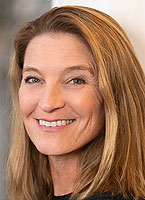
Meredith Stiehm has been a Guild member since 1994, and served on the Board of Directors for six years before becoming WGAW President.
Meredith Stiehm
Meredith Stiehm has been a Guild member since 1994, and served on the Board of Directors for six years before becoming WGAW President. She was a writer and executive producer of Homeland (Showtime) for five years—winning the Emmy, Golden Globe, Writers Guild, and Peabody Awards for drama series. She was the co-creator and executive producer of The Bridge (FX), winner of a 2013 Peabody Award; and creator and executive producer of the drama series Cold Case, which ran for seven years on CBS. Other writing credits include: NYPD Blue (Emmy nomination for outstanding writing for a drama series) and ER (two Emmy nominations for outstanding drama series). Meredith has written pilots for HBO, Showtime, Amazon, and BBC America.
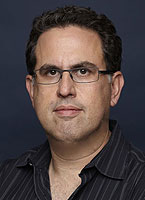
WGAW President David A. Goodman has been writing professionally since 1988, when he was hired as a staff writer on The Golden Girls.
David A. Goodman
Goodman has been writing professionally since 1988, when he was hired as a staff writer on The Golden Girls. Since then he has written for over 20 television series, including Wings, Dream On, Star Trek: Enterprise, Dads and Futurama. He has also served as showrunner/executive producer on American Dad, and Allen Gregory starring Jonah Hill. But his best-known work is on Family Guy, where he was head writer and executive producer for over a hundred episodes. He currently is a showrunner/executive producer of The Orville on Fox, starring Seth MacFarlane. He has served on the Board of Directors of the Writers Guild of America West since 2006, was elected Vice President in 2015, and President in 2017. A graduate of the University of Chicago, he lives in Pacific Palisades, California with his wife and two children.

Rodman is a screenwriter, novelist, and educator. He is a former Writers Guild of America West president...
Howard A. Rodman
Rodman is a screenwriter, novelist, and educator. He is a former Writers Guild of America West president; professor and former chair of the writing division at the USC School of Cinematic Arts; an artistic director of the Sundance Institute Screenwriting Labs; a member of the executive committee of the Writers Branch of the Academy of Motion Picture Arts and Sciences; and a fellow of the Los Angeles Institute for the Humanities.
His films include Savage Grace, starring Julianne Moore, and August, with Josh Hartnett, Rip Torn, and David Bowie—both of which had their U.S. premieres at the 2008 Sundance Film Festival. They were released in 2008 from IFC and First Look, respectively. Rodman's screenplay for Savage Grace was nominated for a Spirit Award in the Best Screenplay category.
Rodman also wrote Joe Gould's Secret, which opened the 2000 Sundance festival and was subsequently released by October/USA Films. Rodman's original screenplay F. was selected by Premiere Magazine as one of Hollywood's Ten Best Unproduced Screenplays. His 1990 novel, Destiny Express, an historical romance set in the pre-war German film community, was blurbed by Thomas Pynchon, who called it "daringly imagined, darkly romantic—a moral thriller."
On the small screen, Rodman wrote several of the episodes of the Showtime anthologies Fallen Angels and The Hunger, adapting Jim Thompson, David Goodis, et al. for directors Tony Scott, Steven Soderbergh, and Tom Cruise. These garnered him two separate Cable Ace nominations for Best Writing. (Rodman's own directorial debut, No Radio, was also seen on Showtime.) Rodman also wrote a one-hour dramatic pilot for HBO, entitled 213 for producers George Clooney, Grant Heslov, and Steven Soderbergh.
In addition to the multiple outings for Soderbergh (who repaid the favor by giving sleazy characters in both Traffic and The Underneath the name of "Mr. Rodman"), Rodman has also worked with Errol Morris, Chantal Akerman, Peter Bogdanovich, David Lynch, Maurice Sendak, Rodrigo Garcia, David Siegel & Scott McGehee, John McTiernan, John Woo, and Clive Barker.
Starting as editor-in-chief of The Cornell Daily Sun, Rodman has published scores of articles in venues including The New York Times, The Los Angeles Times, Los Angeles Magazine, and The Village Voice (for which he was a monthly columnist).
He founded and chaired the Writers Guild Independent Writers Caucus. He has chaired Film Independent's Spirit Awards feature film jury as well as the USC Scripter Awards. He is a former trustee of the Writers Guild Foundation; vice-chair of the Committee on the Professional Status of Writers; and serves on several non-profit boards, among them the Franco-American Cultural Fund, and Cornell in Hollywood. Rodman is an ex-officio Trustee of the American Film Institute and co-chair of Hollywood Health & Society. He is an alumnus of the Seed Fund Board of the Liberty Hill Foundation, and a former editor of The Bill of Rights Journal.
Rodman has been profiled in Salon, the L.A. Weekly, and the WGAW's Written By magazine; has been interviewed by The New York Times, iFilm, and indieWIRE; and has been a guest on KCRW's The Treatment with Elvis Mitchell and the PBS Lehrer NewsHour. Rodman was, with the late Kurt Vonnegut, Jr., a featured speaker at the 125th Anniversary celebration of The Cornell Daily Sun.
In his 20s and early 30s Rodman was a typist, a legal proofreader, a mail-room clerk, a union organizer (for the Committee of Interns and Residents) and the guitarist for various lower-Manhattan post-punk bands (Made in USA; Arsenal; Soul Sharks). He was married to the writer and media scholar Anne Friedberg, author of The Virtual Window, until her death in 2009. Their house, the 1957 John Lautner "Zahn Residence," has been widely published. Their work with Lautner in restoring it was chronicled in the February 2002 issue of Dwell magazine.
His spirited 2011 celebration of the centennial of the fictional French arch-fiend Fantômas took him to Yale University where he delivered a paper; Brown University, where he delivered a multi-media presentation; The New School, where he appeared on a panel; The Hammer Museum, where he showed one of Feuillade's classic films to live musical accompaniment; NOIRCON, where he sang the villain's praises; the Los Angeles Institute for the Humanities, where he gave a Fellows talk; and City Lights Books, where he participated in a four-day celebration.
Working with the Library Foundation of Los Angeles, USC, and the Writers Guild, Rodman has recently conducted public conversations with such writers as Tom Wolfe, Ricky Jay, Jeannette Seaver, Vince Gilligan, Lena Dunham, Laurie Simmons, Matthew Weiner, Paul Thomas Anderson, Jean-Claude Carrière, Geoff Dyer, Cary Fukanaga, and Lady Antonia Fraser. He is a member of the National Film Preservation Board, which advises the Library of Congress on the annual selection of films to the National Film Registry, and on national film preservation planning policy.
On October 31, 2013, Rodman was named a Chevalier de l’Ordre des Arts et des Lettres by the French Republic.
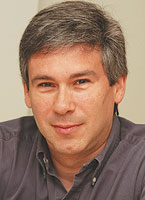
Writers Guild of America West President Christopher Keyser is a graduate of Harvard College and Harvard Law School.
Christopher Keyser
Starting his screenwriting career in 1988, Keyser’s credits include Benefit of the Doubt for Miramax and the independent film Highland Park, which was completed this year. He is currently preparing to direct his own script, A Great Education. In television, he writes with a partner, Amy Lippman. Together, they have worked on series ranging from L.A. Law to Equal Justice and Sisters. In 1994, they created the drama series Party of Five, which ran for six years on Fox and won, among other honors, the Golden Globe for Best Drama and the Humanitas Prize. Keyser and Lippman went on to create such shows as Time of Your Life and Significant Others. This past September, their latest series, Lone Star, premiered on Fox.
Mr. Keyser is also a partner in the political media company First Tuesday. He serves on the Boards of the Curtis School and of the Los Angeles Chapter of the National Association of Urban Debate Leagues, as well as on the Board of Trustees of the I Have a Dream Foundation, Los Angeles.
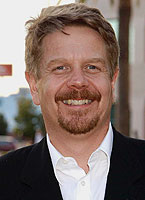
John Wells is one of the most prolific writers, directors and producers for television, film and the stage.
John Wells
Over the past two decades, Wells has been a creative force behind some of primetime’s biggest hit series, including ER, The West Wing, Third Watch and China Beach. He is currently Executive Producer of the hit NBC crime drama, Southland.
A seven-time Writers Guild Award nominee, in 2007, Wells received the WGA’s prestigious Paddy Chayefsky Television Laurel Award, given to writers who have advanced the literature of television and made outstanding contributions to the profession of television writers. In 2005, Wells was awarded the David Susskind Achievement Award in Television from the Producers Guild of America.
Shows produced by John Wells have received an astounding 267 Emmy nominations with 55 Emmy wins, not to mention 5 Peabody Awards, and numerous People's Choice Awards, Producers Guild Awards, a Humanitas Prize (nominated 7 times), as well as numerous distinctions from health care organizations across the country for ER. During its fifteen year run, ER earned 122 Emmy nominations, the most in television history.
Wells recently wrote and directed The Company Men, a theatrical drama set against the backdrop of affluent Boston suburbs that vividly portrays the struggles of families coping with the current ongoing economic meltdown. The film marks Wells’ feature film directorial debut.
Born in Alexandria, Virginia, and raised in Denver, Colorado, Wells graduated from Carnegie-Mellon University in Pittsburgh, Pennsylvania, with a bachelor of fine arts and later earned a Masters degree in film and television at the University of Southern California, where he also serves on the school’s Television Executive Advisory Council.
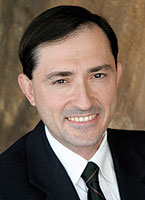
Patric M. Verrone graduated magna cum laude from Harvard College where he was an editor of The Harvard Lampoon.
Patric M. Verrone
Patric M. Verrone graduated magna cum laude from Harvard College where he was an editor of The Harvard Lampoon. He got his law degree from Boston College Law School where he served on the Boston College Law Review. He is a member of the California and Florida Bars, has been an adjunct professor of entertainment law at Loyola Law School and UCLA Extension, and has served as editor of the Annual Entertainment Law Issue of Los Angeles Lawyer magazine since 1996. He has been a television writer and producer for nearly 20 years and his credits include The Tonight Show Starring Johnny Carson, The Larry Sanders Show, The Critic, Pinky and the Brain, Rugrats, Muppets Tonight, Futurama, and The Simpsons. He has won two Emmys and been nominated eight times in four different categories. He won the 2002 Writers Guild Animation Caucus Lifetime Achievement Award. He is married to fellow TV writer and novelist Maiya Williams. They have three children (who also want to be writers) and a Labrador retriever (who wants to direct).
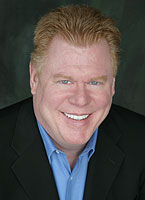
A member of the Writers Guild since 1984, Daniel Petrie Jr. wrote the screenplays for Beverly Hills Cop, starring Eddie Murphy, and The Big Easy...
Daniel Petrie Jr.
A member of the Writers Guild since 1984, Daniel Petrie Jr. wrote the screenplays for Beverly Hills Cop, starring Eddie Murphy (for which he received an Oscar nomination), and The Big Easy, starring Dennis Quaid and Ellen Barkin. Petrie then co-wrote and produced Shoot to Kill, starring Sidney Poitier, co-wrote and exec-produced Turner and Hooch, starring Tom Hanks, and co-wrote and directed Toy Soldiers, starring Sean Astin and Louis Gossett, Jr. Petrie also directed the HBO movie Dead Silence, with James Garner and Marlee Matlin, and wrote and directed the TNT movie Framed, starring Rob Lowe and Sam Neill.
In addition to his two terms as WGAW president, Petrie also served the Guild in elective office as a member of the Board of Directors (1994-95) and as vice president (1995-97 and 1999-01).
A member of the Board of Trustees of the Writers Guild Foundation, Petrie was also the chair of Foundation’s new library committee in 2005.
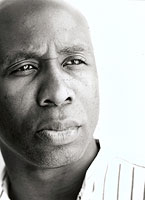
Television writer and producer Charles D. Holland has worked on numerous shows, including JAG, Profiler, Millennium, Murder One, and New York Undercover.
Charles D. Holland
Television writer and producer Charles D. Holland has worked on numerous shows, including JAG, Profiler, Millennium, Murder One, and New York Undercover. A member of the California Bar, Holland has a law degree from Harvard Law School, and is a former vice president of business affairs at 20th Century Fox.
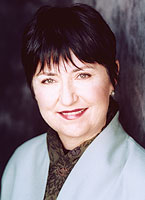
Victoria Riskin is a writer-producer in television and a human rights activist, and the first woman president in WGAW history.
Victoria Riskin
Victoria Riskin is a writer-producer in television and a human rights activist, and the first woman president in WGAW history. In addition to advocating for the rights of television and screenwriters, she was active is opposing media concentration and lobbied in Washington for greater diversity and independent voices in television.
Riskin’s television career began in 1989 as executive producer of the award-winning telefilm The Last Best Year, starring Mary Tyler Moore and Bernadette Peters, based on her experiences as a psychologist in private practice. She produced A Town Torn Apart for NBC with Michael Tucker and Jill Eikenberry. With her husband, past WGAw president David W. Rintels, Riskin produced World War II: When Lions Roared, for which they received the Outstanding Producers of the Year Award from the Producers Guild of America. The miniseries won one Emmy and received six Emmy nominations. She was also executive producer of a television adaptation of Carson McCullers’ The Member of the Wedding, starring Anna Paquin and Alfre Woodard.
Riskin’s screenwriting career began with her adaptation of Willa Cather’s classic novel My Antonia, starring Jason Robards and Eva Marie Saint for which she won the World Media Award Silver Medal for Screenwriting. She has written movies and mini-series for CBS, NBC, and the USA network. She has lectured widely on film writing and producing. A past chair and a trustee of the Writers and Producers Pension and Health Fund, she was also a founding chair of Hollywood Health & Society, a joint project of Annenberg School of Communication, the Norman Lear Center, the Centers for Disease Control and the WGA. Riskin is a past trustee of the American Film Institute and the Museum of Radio and Television and has served on the advisory board of the Partnership for Public Service and as a member of the International Women’s Forum.
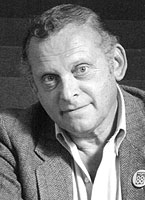
Brad Radnitz’s television writing credits include The Lucy Show, Ironside, McMillan and Wife, Family Affair, Streets of San Francisco, The Brady Bunch...
Brad Radnitz
Brad Radnitz’s television writing credits include The Lucy Show, Ironside, McMillan and Wife, Family Affair, Streets of San Francisco, The Brady Bunch, Columbo, McHale’s Navy, Cannon, Trapper John, M.D., Tour of Duty, and Mission Impossible. His films and television movies-of-the-week include The Reluctant Spies, Cops and Robin, and To Die in Paris.
His credits as head writer, executive story consultant, and producer include Lone Star Bar & Grill, Dalton, Call to Glory, The Wizard, and MacGyver. Radnitz served as a panelist for the National Endowment of the Humanites and the National Endowment for the Arts and received the WGAw Morgan Cox Award in 1982.
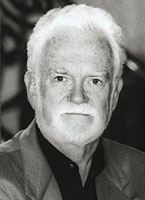
Writer, director and producer Frank Pierson’s credits include Oscar-nominated Cat Ballou (1965) and Cool Hand Luke (1967)...
Frank Pierson
Writer, director and producer Frank Pierson’s credits include Oscar-nominated Cat Ballou (1965) and Cool Hand Luke (1967), the Oscar-winning Dog Day Afternoon (1975), and Presumed Innocent (1990), The Neon Ceiling (1971), Looking Glass War (1969), A Star is Born (1976), King of the Gypsies (1978), Citizen Cohn (1992), and Paradise (2004) are among his directing credits.
Pierson served four terms as president of the Academy of Motion Pictures Arts and Sciences beginning in 2001. In 1992 he received a WGA Screen Laurel Award and a Peabody Award. He was given the WGAW Valentine Davies Award in 1991 and the Humanitas “Keiser Award” in 2005. Pierson has served on the boards of AMPAS, the Los Angeles Theater Center, Artists Rights Foundation, and Humanitas. He has been a faculty member of the Sundance Institute as well as a lecturer at the American Film Institute and the University of Southern California.
Pierson was born in Chappaqua, New York, and served in the Pacific during World War II. He earned a degree with honors in cultural anthropology from Harvard University. He was a field correspondent for Time and Life magazines, covering movies and military affairs. In 1958 he quit journalism, sold his first script to the half-hour anthology Alcoa Goodyear Theater and worked as script editor for Have Gun Will Travel.
Pierson died in Los Angeles on July 23, 2012 at the age of 87.
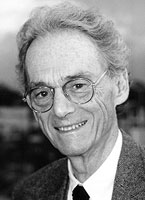
Del Reisman began his career in the days of live television in the 1950s, working on such shows as NBC Matinee Theater...
Del Reisman
Del Reisman began his career in the days of live television in the 1950s, working on such shows as NBC Matinee Theater, and then as story editor for the acclaimed Playhouse 90, on which he worked with producer Martin Manulis, writers Rod Serling, David Shaw and Robert Alan Aurthur, and directors John Frankenheimer, Franklin Schaffner, George Roy Hill, Arthur Penn, and Arthur Hiller.
He went on to become story editor for The Twilight Zone, then produced or storyedited or wrote episodes for The Untouchables, Rawhide, Peyton Place, The Streets of San Francisco, Cannon, The Blue Knight, Banacek, Cagney & Lacey, and The Yellow Rose, among many others.
Reisman received the WGAW Morgan Cox Award in 1999 for his dedicated service to the Guild. In addition to his stint as Guild president, he served as vice president, member of the Board of Directors, chaired three consecutive negotiating committees, and participated in or chaired more than 20 other Guild committees, including TV credits, blacklist credits, and the president’s task force on communication.
He taught screenwriting in the American Film Institute’s advanced screenwriting workshop, and was the Guild’s delegate to the National Film Preservation Board of the Library of Congress.
During his presidency, Reisman met with Sen. Paul Simon (D-Ill.) and other legislators to take a First Amendment position on the powerful efforts by both Democrats and Republicans to condemn writers for the violent content of television. It was the second time in the history of American television that Congress had investigated violence in primetime. But the ’91-’93 campaign was the most determined to fix blame. Reisman represented the Guild’s interests in Washington and Los Angeles.
Reisman died in Toluca Lake on January 8, 2011. He was 86.
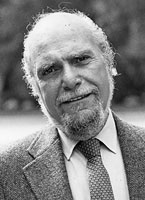
George Kirgo’s prolific film and TV writing career includes credits for Red Line 7000 (1965), Spinout (1966), Don’t Make Waves (1967), Voices (1973)...
George Kirgo
George Kirgo’s prolific film and TV writing career includes credits for Red Line 7000 (1965), Spinout (1966), Don’t Make Waves (1967), Voices (1973); 15 movies of the week, including Get Christie Love! (1974), The Man in the Santa Claus Suit (1978), Angel on My Shoulder (1980), and The Kid with the Broken Halo (1982). He contributed episodes to popular TV series Adam’s Rib, The Mary Tyler Moore Show, and Love, American Style.
He led the membership through the 1988 strike as Guild president, and was later vice president emeritus of the Writers Guild Foundation, active in the Guild’s blacklist credits committee, and chaired the president’s committee on the professional status of writers. The WGAW presented Kirgo with the Morgan Cox Award in 2001 for his continuing efforts and personal sacrifice.
He was also a founding member of the National Film Preservation Board of the Library of Congress, an Academy of Motion Picture Arts and Sciences member, and he received the president’s award from PEN in 1988.
Kirgo was born in Hartford, Connecticut, on March 26, 1926, educated at Wesleyan University, and served in the U.S. Army Air Forces during World War II. He moved to New York in the 1950s, and launched his entertainment career writing comedic novels such as Hercules, the Big Greek Story, which caught the attention of Jack Paar, who invited him as a frequent guest on his popular talk show. Kirgo died August 22, 2004.
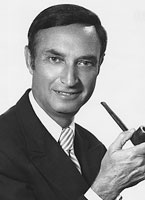
Melville Shavelson received two Academy Award nominations for his original screenplays and has written or co-written more than 30 theatrical motion pictures.
Melville Shavelson
Melville Shavelson received two Academy Award nominations for his original screenplays and has written or co-written more than 30 theatrical motion pictures, including The Seven Little Foys (1955), Beau James (1957), Houseboat (1958), The Five Pennies (1959), and It Started in Naples (1960) as well as Yours, Mine and Ours (1968), all of which he also directed. For television, he created two Emmy Award-winning series, including My World and Welcome to It, two telefilms, and the ABC Eisenhower miniseries, Ike, The War Years. He also wrote a Broadway musical, Jimmy, two novels, and four works of nonfiction, including the 1992 best-seller, Don’t Shoot, It’s Only Me, in collaboration with Bob Hope.
Shavelson’s service to the Guild dates back to 1944. In addition to having served three terms as WGAW president, he served as Writers Guild Foundation president for 20 years, WGAW first vice president, member of the board of directors, and chairman or member of more than 20 committees, including the screen credits panel, copyright study, and employer practices. He received the WGAW Valentine Davies Award in 1979, the Screen Laurel Award in 1984, and the Morgan Cox Award in 1998. In 2005, the Writers Guild Foundation named its library the Shavelson-Webb Library in recognition of his work and that of its founder, James Webb.
He was born in New York City on April 1, 1917, and was educated at Cornell University. He died on August 8, 2007 in Studio City at age 90.
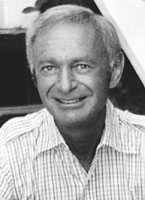
Six-time Oscar-nominated and five-time WGA Award-winning writer Ernest Lehman was the only screenwriter in history to receive an honorary Academy Award.
Ernest Lehman
Six-time Oscar-nominated and five-time WGA Award-winning writer Ernest Lehman was the only screenwriter in history to receive an honorary Academy Award, in recognition for films such as Executive Suite (1954), Sabrina (1954), The King and I (1956), North by Northwest (1959), West Side Story (1961), The Sound of Music (1965), Who’s Afraid of Virginia Wolf? (1966), and Hello, Dolly! (1969).
In 1972, Lehman received the WGA’s prestigious Screen Laurel Award for advancing the literature of the motion picture through the years, and for outstanding contributions to the screenwriting profession. He was a WGAw board member throughout his career, sat on many committees, and served on the Writers Guild Foundation board of directors.
Lehman was born in New York City on December 8, 1915, and earned a bachelor’s degree at the City University of New York. He held several editorial positions, including publicity copy writing and copy editor before he moved to California to adapt a screenplay for Paramount Studios in 1953. He wrote the story collections The Comedian and Other Stories, Sweet Smell of Success and Other Stories, and the novels The French Atlantic Affair and Farewell Performance. He died on July 2, 2005.
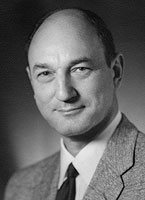
Daniel Taradash wrote or co-wrote Golden Boy (1939), the Academy Award-winning From Here to Eternity (1953), Picnic (1955), Bell, Book and Candle (1958)...
Daniel Taradash
Daniel Taradash wrote or co-wrote Golden Boy (1939), the Academy Award-winning From Here to Eternity (1953), Picnic (1955), Bell, Book and Candle (1958), Hawaii (1966), and Castle Keep (1969). He co-wrote and directed Storm Center (1956), starring Bette Davis.
Taradash won every top Guild award—the Valentine Davies Award in 1971, the Morgan Cox Award in 1988, the Edmund H. North Award in 1991, and the Screen Laurel Award in 1996. He was president of the Screen Branch of the Guild from 1955 to 1956, and first vice president in 1957, before serving as president in 1977. He served on more than 30 Guild committees. An active member of the Academy of Motion Picture Arts and Sciences, he was vice president from 1968 to 1970, and elected president in 1970. He was on the AMPAS board of governors from 1990 to 1993. In addition, he served on the American Film Institute board of trustees, and held leadership positions in many other entertainment and arts organizations.
He was born in Louisville, Kentucky, on January 29, 1913. Taradash earned a Harvard law degree, and passed the New York State bar, but never practiced. In 1941, he was drafted into the U.S. Army, where he worked on numerous training and motivational films for the Signal Corps. He died February 22, 2003.
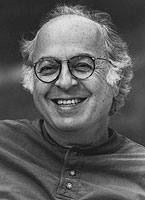
David W. Rintels has written many highly acclaimed television miniseries and movies of the week, including Nuremberg (2000), The Member of the Wedding (1997)...
David W. Rintels
David W. Rintels has written many highly acclaimed television miniseries and movies of the week, including Nuremberg (2000), The Member of the Wedding (1997), Andersonville (1996), World War II: When Lions Roared (1994), The Last Best Year (1990), Day One (1988), Sakharov (1984), Gideon’s Trumpet (1980), Fear on Trial (1975), and Clarence Darrow (1974), which he adapted from his successful Broadway play. As an episode writer, he worked on The Defenders and Slattery’s People, and was head writer for The Invaders. His movies include Scorpio (1972), which starred Burt Lancaster and Paul Scofield.
Rintels has won three Emmys and three Writers Guild Awards as well as other top honors such as the WGA Paddy Chayefsky Laurel Award for Television in 1997, the WGAW Valentine Davies Award in 1980, and the Morgan Cox Award in 2003. In 1994, Rintels received the Producer of the Year Award from the Producers Guild of America for his work on World War II: When Lions Roared. In addition, he received the Bill of Rights Award from the American Civil Liberties Union in 1980.
His distinguished service to the WGAW and its members has included several terms on the Board of Directors, and he has served on more than 25 Guild committees, chairing many, including national affairs, freedom of expression, cultural exchange, and censorship.
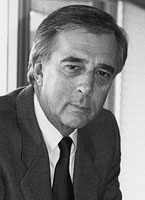
John Furia Jr. wrote for several popular television series, such as Bonanza, The Twilight Zone, Dr. Kildare, Bob Hope Presents the Chrysler Theatre, Hawaii Five-O...
John Furia Jr.
John Furia Jr. wrote for several popular television series, such as Bonanza, The Twilight Zone, Dr. Kildare, Bob Hope Presents the Chrysler Theatre, Hawaii Five-O, The Waltons, Kung Fu, and Arthur Hailey’s Hotel. He was the showrunner for series such as Kung Fu, John O’Hara’s Gibbsville, and The Dirty Dozen and wrote feature films for MGM, Columbia, and Universal. As producer and executive producer, he was responsible for many made-for-TV films, series, and mini-series such as The Blue Knight, The Intruder Within, Sidney Sheldon’s Rage of Angels, and The Sun Also Rises. In addition to his service to the WGAw, Furia was the founding vice president of the Humanitas Prize and a member of the executive committee, vice president of the Writers Guild Foundation, and served on the board of governors of the Academy of Television Arts and Sciences and the board of directors of the National Captioning Institute. The founding chairman of the University of Southern California’s School of Cinema-Television writing division, Furia was a professor of writing for screen and television at the University of Southern California. Furia was born on August 16, 1929 in New York City and died on May 7, 2009 in Los Angeles.
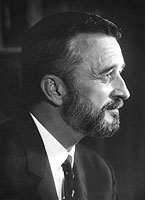
Screenwriter, director, and producer Ranald MacDougall collaborated with writers Alvah Bessie and Lester Cole on Objective, Burma (1945)...
Ranald MacDougall
Screenwriter, director, and producer Ranald MacDougall collaborated with writers Alvah Bessie and Lester Cole on Objective, Burma (1945), received an Oscar nomination for Mildred Pierce (1945), adapted the Ernest Hemingway novel Breaking Point (1950), was one of several writers to work on Cleopatra (1963), and directed The World, the Flesh and the Devil (1959).
MacDougall was born in Schenectady, New York, on March 10, 1915, and left high school at the age of 16 to write radio scripts. By age 27, his radio writing career was so dazzling that it prompted the New York Times to run an interview with MacDougall titled, “R. MacD., Life and Works.”
By age 18, MacDougall wrote regularly for newspapers and occasionally for radio. After working for NBC as a mimeograph operator, he was hired as a scriptwriter at 21 and fired off more than 40 original half-hour plays. MacDougall attracted the attention of the British Broadcasting Corporation, and then, Norman Corwin. Corwin invited him to write for the Air Corps series This is War. Married to actress Nanette Fabray, MacDougall died in Pacific Palisades in 1973 at the age of 58.
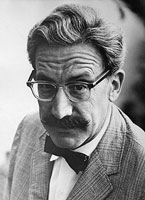
Screenwriter and novelist Michael Blankfort’s credits include The Caine Mutiny (1954), Untamed (1955), Tribute to a Bad Man (1956), The Plainsman (1966)...
Michael Blankfort
Screenwriter and novelist Michael Blankfort’s credits include The Caine Mutiny (1954), Untamed (1955), Tribute to a Bad Man (1956), The Plainsman (1966), and A Fire in the Sky (1978). He fronted for blacklisted writer Albert Maltz, taking screen credit for Broken Arrow (1950), which won a Screen Writers' Guild award. In 1991 the WGAW corrected the credit and commended Blankfort for his courage.
He wrote 14 novels, including A Cry from a Red Field, Take the A Train, Behold the Fire, and The Juggler, which he later adapted for the screen.
Avid art collectors, he and his wife Dorothy donated more than 250 modern and contemporary artworks to the Los Angeles County Museum of Art. The collection included “Montauk Highway,” a 1958 painting by abstract expressionist Willem de Kooning.
Blankfort was born on December 10, 1907, in New York City, taught at Bowdoin College and Princeton University, worked as a New Jersey prison psychologist before moving to Hollywood in 1937, and served as a National Academy of Motion Picture Arts and Sciences board member. He died in Los Angeles on July 13, 1982.
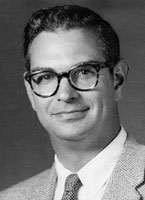
Christopher Knopf, who received three Writers Guild Awards for his television writing, wrote the made-for-television movies Mrs. Sundance (1974)...
Christopher Knopf
Christopher Knopf, who received three Writers Guild Awards for his television writing, wrote the made-for-television movies Mrs. Sundance (1974), Scott Joplin: King of Ragtime (1977), The Girl Who Spelled Freedom (1986), the miniseries Peter and Paul (1981), and the pilot episode for the classic 1970s TV series The Big Valley. He was supervising producer for Cimarron Strip (1967) and co-executive producer for the TV series Equal Justice (1990), which earned him a NAACP Award. His feature film credits include Emperor of the North (1973).
In addition to serving as WGAW president, he was WGA national chairman and International Writers Guild vice president from 1967 to 1969. He has participated in and chaired several Guild committees, including MBA Enforcement, Screen Credits, TV Credits, Screen Grievance, Affirmative Action, and Credits Review. Knopf was also a trustee of the Motion Picture Relief Fund from 1957 to 1959. He received the WGAW Morgan Cox Award in 1991 and the Edmund H. North Award in 2002 for his 40 years of service to the Guild and professional achievement.
Knopf died in Santa Monica, California on February 13, 2019.

Radio, television, and film writer Nate Monaster co-wrote That Touch of Mink (1962) with Stanley Shapiro, Call Me Bwana (1963) with Johanna Harwood...
Nate Monaster
Radio, television, and film writer Nate Monaster co-wrote That Touch of Mink (1962) with Stanley Shapiro, Call Me Bwana (1963) with Johanna Harwood, and contributed to classic television shows such as Bachelor Father, Alcoa Theater, The Donna Reed Show, Andy Griffith, All in the Family, Goodyear Theater, Get Smart, The Ghost & Mrs. Muir, Three’s a Crowd, and Archie Bunker’s Place. He also wrote for the Burns and Allen radio show. Monaster received the WGAW Morgan Cox Award in 1984.
He was born on September 22, 1911, and died in Los Angeles on May 12, 1990.
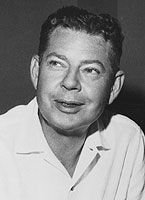
Academy Award-winning writer James R. Webb’s credits include Rags to Riches (1941), Apache (1954), Trapeze (1956), The Big Country (1958), Cape Fear (1962)...
James R. Webb
Academy Award-winning writer James R. Webb’s credits include Rags to Riches (1941), Apache (1954), Trapeze (1956), The Big Country (1958), Cape Fear (1962), the Oscar-winning How the West Was Won (1962), They Call Me Mister Tibbs (1970), and The Organization (1970).
In addition to his stint as WGAW president, he was a founder and former president of the International Writers Guild, former national chairman of the WGA, secretary of the Screen Writers Guild, and president of the Writers Guild Foundation. Webb was also chairman of the Producers-Writers Pension Plan.
He was born in Denver on October 4, 1909, and graduated from Stanford University in 1930. Webb served in World War II in Europe as major. He died in Los Angeles on September 27, 1974.
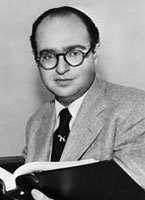
Academy Award-winning writer Charles Schnee used his aversion to stereotypes to create the characters in Red River (1948), The Furies (1950)...
Charles Schnee
Academy Award-winning writer Charles Schnee used his aversion to stereotypes to create the characters in Red River (1948), The Furies (1950), Westward the Women (1951), The Bad and the Beautiful (1952), for which he won the Oscar, and Butterfield 8 (1960).
He drew upon a ranching experience in Wyoming to create realistic westerns, shunning the formulaic hero-versus-villain picture in favor of what he called the “big Western.” “In the ‘big Western,’” he wrote, “the struggle is that of man against the elements, as in Red River, or of man against his fate, as in The Furies. The conflict is no longer easy, but it has adult appeal. The average adult today doesn’t meet many villains in his time, but he has a keen sense of struggling against forces in the world he doesn’t quite understand.”
As WGAW president, he urged screenwriters to write parts for African-Americans that portrayed them “as they exist on the American scene.”
Schnee was born in Bridgeport, Connecticut, in 1916. He earned a law degree from Yale University, and was a lawyer in New York. He wrote two Broadway plays before moving to L.A. Schnee died on November 29, 1962.
Curtis Kenyon’s screen credits include Lloyds of London (1936), Seven Days’ Leave (1942), starring Lucille Ball, the Bob Hope comedy The Princess and the Pirate...
Curtis Kenyon
Curtis Kenyon’s screen credits include Lloyds of London (1936), Seven Days’ Leave (1942), starring Lucille Ball, the Bob Hope comedy The Princess and the Pirate (1944), Tulsa (1949), and Two Flags West (1950), both co-written with Frank S. Nugent. He wrote for the television series The Lone Ranger, Rawhide, The Untouchables, and Hawaii Five-O.
He served as WGAW’s secretary-treasurer in 1955. As president, he led the Guild during the 1960 five-month television writers’ strike that earned members a 10 percent minimum wage increase and four percent of the gross receipts for reruns.
Kenyon was born on March 12, 1914. The Magnificent Fraud, a play written in his teens, landed him a $50-a-week staff writer job at 20th Century Fox in the early 1930s. He continued to write film scripts and plays into his 80s, and his play Natural Selection enjoyed a run in 2001. He died on April 6, 2003.
Ken Englund’s writing career began in his early 20s, when he submitted a joke about King Kong that landed him a job as a writer for The Phil Baker Hour.
Ken Englund
Ken Englund’s writing career began in his early 20s, when he submitted a joke about King Kong that landed him a job as a writer for The Phil Baker Hour, a Chicago radio show. His Hollywood career began with The Big Broadcast of 1938, starring Bob Hope, W.C. Fields, and Dorothy Lamour. He went on to write and co-write a number of other popular films, including No, No Nanette (1940), Sweet Rosie O’Grady (1943), starring Betty Grable, an adaptation of The Unseen (1945), and The Secret Life of Walter Mitty (1947). The latter proved to be one of Englund’s greatest successes, despite author James Thurber’s protests over the changes to his classic short story. Englund also worked in television, serving as head writer for Dr. Joyce Brothers’ television series, and contributing scripts for The Jackie Gleason Show, My Three Sons, Bewitched, That Girl, and The Loretta Young Show.
Englund was born in Chicago on May 6, 1914. Following his service as the president of the WGAW’s screen branch, Englund was first vice president for the Guild’s council in 1961. He died in Woodland Hills on August 10, 1993.
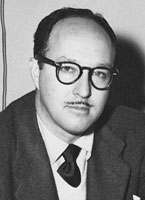
Screenwriter, playwright, producer Edmund L. Hartmann worked at nearly every Hollywood studio, and wrote in almost every film genre.
Edmund L. Hartmann
Screenwriter, playwright, producer Edmund L. Hartmann worked at nearly every Hollywood studio, and wrote in almost every film genre, including the crime drama Law of the Underworld (1938), the musical Time Out for Rhythm (1941), the adventure Ali Baba and the Forty Thieves (1944), the comedy Casanova’s Big Night (1954), the horror film The Face of Marble, and Sherlock Holmes mysteries such as The Scarlet Claw (1944). He wrote seven popular films for Bob Hope, including The Paleface (1948), as well as the Dean Martin and Jerry Lewis comedy The Caddy (1953). As television producer and writer he created the series My Three Sons, staying with the show for its 12-year run, Family Affair, and The Smith Family.
In 1964 Hartmann served as WGA national chairman, and he received the Guild’s Morgan Cox Award in 1985. A strong advocate for writers, he said in a 1959 New York Times interview, “Movie making is essentially the telling of a story, but the simple function of the story teller has been obscured by a complex machinery of manufacture.”
He was born on September 24, 1911, in St. Louis, Missouri, and died in Santa Fe, New Mexico, on November 28, 2003.
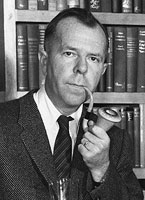
Writer and first WGAW president Richard Breen’s films include A Foreign Affair (1948), Miss Tatlock’s Millions (1948), Niagara (1953)...
Richard L. Breen
Writer and first WGAW president Richard Breen’s films include A Foreign Affair (1948), Miss Tatlock’s Millions (1948), Niagara (1953), Seven Cities of Gold (1955), Pete Kelley’s Blues (1955), State Fair (1962), and Captain Newman, M.D. (1963). He wrote television scripts for Dragnet, a spin-off of a radio program he created with actor-director Jack Webb, Breen’s friend and associate. Breen also collaborated with Billy Wilder and Charles Brackett, with whom he shared a best screenplay Oscar for Titanic (1953). In addition, he wrote and directed Stopover Tokyo (1957).
“If anyone taught me craftsmanship without trying, it was he,” Jack Webb said of Breen in a 1967 Los Angeles Times interview. “It’s as if he were leaning over my shoulder saying, ‘Not that way, Jack. There isn’t a scene in the world you can’t do in five-and-a-half pages or less.’ From him I learned economy and a lot more. He was the single most influential human being in my life.”
Breen was born in Chicago, Illinois, in 1918 (or 1919, according to some sources), earned a master’s degree in philosophy from Fordham University, and served in the Navy during World War II. He was active in his university’s alumni affairs. He received the WGAW Edmund H. North Award in 1967 and died in Burbank on February 1 that same year.
Screen Writers' Guild Presidents
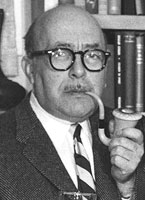
Frederick Hugh Herbert wrote for the theater, film, television, and radio from the 1920s until 1958.
F. Hugh Herbert
Herbert wrote the play Kiss and Tell, which ran for more than 950 performances on Broadway, and later adapted and co-produced it for film. He also wrote magazine articles as well as successful radio programs such as Meet Corliss Archer, which he created.
Born in Vienna in 1897, Herbert was educated in England’s University of London, where he studied to become a mining engineer. The British Army rejected him when he tried to enlist for War World I duty, and he found work in the advertising department of a London department store. He emigrated to the U.S. in 1920, and wrote his first film scripts in 1921 in addition to several novels and poetry books. Herbert died in Beverly Hills on May 17, 1958.
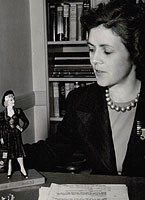
First woman president of the Screen Writers Guild, Mary Caldwell McCall Jr., wrote or co-wrote the screenplays for A Midsummer Night’s Dream (1935)...
Mary C. McCall Jr.
First woman president of the Screen Writers Guild, Mary Caldwell McCall Jr., wrote or co-wrote the screenplays for A Midsummer Night’s Dream (1935), Craig’s Wife (1936), The Sullivans (1944), Mr. Belvedere Goes to College (1949), and eight of the 10 Maisie films. She also wrote episodes for the television series Gilligan’s Island, I Dream of Jeannie, Sea Hunt, and The Millionaire. McCall received the WGAw Valentine Davies Award in 1962.
During World War II, she was the West Coast head of the war activities committee of the motion picture industry. In 1954, she testified before the State Senate fact-finding committee on un-American activities, denying reports that she was a communist sympathizer and condemning political extremism.
McCall was born on April 4, 1904, in New York City, and got her start as a film writer in the 1930s when Warner Bros. hired her to collaborate on a script based on her novel Revolt. She died on April 3, 1986, in Woodland Hills.

Karl Tunberg wrote or co-wrote Rebecca of Sunnybrook Farm (1938), Down Argentine Way (1940), the Oscar-nominated Tall, Dark and Handsome (1941)...
Karl Tunberg
Karl Tunberg wrote or co-wrote Rebecca of Sunnybrook Farm (1938), Down Argentine Way (1940), the Oscar-nominated Tall, Dark and Handsome (1941), Orchestra Wives (1942), the WGA- and Oscar-nominated Ben-Hur (1959), and episodes of the television series Bonanza, Mannix, and Cannon. He produced Kitty (1945), Up in Central Park (1948), You Gotta Stay Happy (1948), and The 7th Dawn (1964), among several other films.
He was born March 11, 1907. Tunberg set out to be a teacher, but turned to script writing after he won a short story competition. He died in 1992 in London, where he lived during his last 20 years.
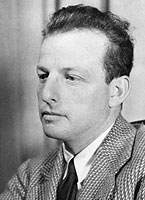
Valentine Davies is best known for writing the Academy Award-winning story for Miracle on 34th Street (1947).
Valentine Davies
Valentine Davies is best known for writing the Academy Award-winning story for Miracle on 34th Street (1947) in collaboration with writer-director-producer George Seaton. Additional writing or co-writing credits include Chicken Every Sunday (1949), The Glenn Miller Story (1953), The Bridges at Toko-Ri (1955), and the Benny Goodman Story (1955), which he also directed. Davies wrote and produced House Without a Name (1956), a documentary about the work of the Motion Picture Relief Fund.
The Academy of Motion Picture Arts and Sciences houses the Valentine Davies Collection, the screenwriter’s scripts, drafts, and plays from 1925 to 1960. Another honor that immortalizes Davies’ contributions to his craft is the WGAw’s Valentine Davies Award, given to Guild members whose contributions to the entertainment industry and the wider community have brought dignity and honor to all writers. In addition to serving as WGAw president, he co-chaired the Guild’s screen negotiating committee in 1960 during negotiations with Universal-International Film Studios. He served on the AMPAS Board of Governors from 1955 to 1961.
Davies was born in New York City on August 25, 1905, and attended the University of Michigan and the Yale University drama school. He served in the U.S. Armed Forces during World War I. Davies died in Malibu on July 23, 1961.
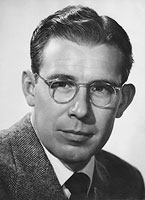
George Seaton won two best screenplay Academy Awards for Miracle on 34th Street (1947) and The Country Girl (1954)...
George Seaton
George Seaton won two best screenplay Academy Awards for Miracle on 34th Street (1947) and The Country Girl (1954), and earned nominations for The Song of Bernadette (1943) and Airport (1970). Other writing credits include the Marx Brothers classic A Day at the Races (1937), an adaptation of Moon Over Miami, and Chicken Every Sunday (1949). He directed and produced numerous films, and received a best director Oscar nomination for The Country Girl. Seaton’s Airport was Universal Pictures’ largest moneymaker until Jaws.
In addition to his WGAW service, he was three times president of the Academy of Motion Pictures Arts and Sciences, and served as vice president of the Motion Picture Relief Fund. The WGA gave him the the Screen Laurel Award in 1961 and he received the WGAw Valentine Davies Award in 1968. He received the AMPAS Jean Hersholt Humanitarian Award in 1961, and the Beverly Hills Chamber of Commerce’s Will Rogers Memorial Award in 1973.
Seaton was born in South Bend, Indiana, on April 17, 1911. He attended Exeter Academy, and rejected a Yale University scholarship to audition for Jessie Bonstelle’s drama school. She hired him for her stock company at $15 a week. He worked for radio as the voice of the Lone Ranger, and wrote several plays until he was hired by MGM. He died on July 28, 1979, in Beverly Hills.
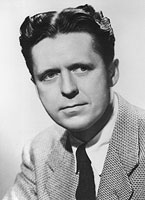
Sheridan Gibney shared Academy Awards with co-writer Pierre Collings for original story and screenplay for The Story of Louis Pasteur (1936).
Sheridan Gibney
Sheridan Gibney shared Academy Awards with co-writer Pierre Collings for original story and screenplay for The Story of Louis Pasteur (1936). He co-wrote I Am a Fugitive from a Chain Gang (1932) with Howard J. Green and Brown Holmes. Other screenplays include The Green Pastures (1936), Anthony Adverse (1936), Disputed Passage (1939), Our Hearts Were Young and Gay (1944), and The Locket (1946). For television, he wrote episodes for Bachelor Father, The Man from U.N.C.L.E., The Six Million Dollar Man, and Police Woman.
Gibney was born in New York City on June 11, 1903, and began his career as a playwright and literary critic in the 1920s. He died in Missoula, Montana, in April 1988.
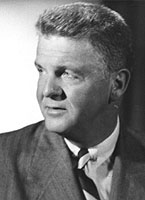
Emmet Lavery and co-writer Milton Sperling earned an Academy Award nomination for their screenplay The Court Martial of Billy Mitchell (1955).
Emmet Lavery
Emmet Lavery and co-writer Milton Sperling earned an Academy Award nomination for their screenplay The Court Martial of Billy Mitchell (1955). Lavery’s television movie Magnificent Yankee (1950) won five Emmys. One of his earliest plays, The First Legion, was produced on Broadway, then in Europe, and was translated into more than a dozen languages. His other works include the play Gentlemen from Athens, the film Bright Road (1953), and the television script Continental Congress: 1976.
In addition to being WGAw president, Lavery was elected vice president of the Academy of Motion Picture Arts and Sciences in 1946 and later, secretary of the Academy’s board of governors.
Lavery was born on November 8, 1902, in Poughkeepsie, New York. He earned a law degree from Fordham University and began his professional life as a trial lawyer, then worked as a journalist and city editor in his hometown for 10 years before becoming a playwright and screenwriter. He died in Tarzana on January 1, 1986.
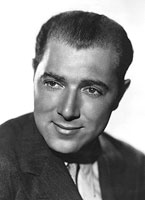
A Screen Writers Guild founder, Lester Cole wrote more than 40 films, including The Invisible Man Returns (1940), The House of Seven Gables (1940)...
Lester Cole
A Screen Writers Guild founder, Lester Cole wrote more than 40 films, including The Invisible Man Returns (1940), The House of Seven Gables (1940), Objective Burma (1945), The Romance of Rosy Ridge (1947), High Wall (1947), and Born Free (1966).
One of the “Hollywood Ten” who refused to testify before the House Committee on Un-American Activities, Cole was imprisoned and blacklisted, forced to write his last few screenplays using pseudonyms for 15 percent of the salary he commanded before the blacklist. After serving his sentence, he worked as a short-order cook, waiter, and manual laborer. In 1961 he moved to London to write plays but had little commercial success, and returned to the U.S. to live in San Francisco. He then taught university extension courses in screenwriting.
He was born in New York City on June 19, 1904, and left school at the age of 16 to eventually become a stage director and playwright. Cole moved to Hollywood in 1932 with several other writers who worked on the film If I Had a Million. In 1982, he wrote his autobiography Hollywood Red. Cole died in San Francisco on August 15, 1985.
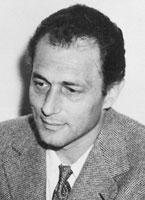
Sidney Buchman’s screenwriting career began with The Sign of the Cross (1932) for Cecil B. DeMille, and really took off with his first hit, Theodora Goes Wild (1936).
Sidney Buchman
Sidney Buchman’s screenwriting career began with The Sign of the Cross (1932) for Cecil B. DeMille, and really took off with his first hit, Theodora Goes Wild (1936). His credits include Mr. Smith Goes to Washington (1939), Here Comes Mr. Jordan (1941), for which he shared a best screenplay Oscar with Seton I. Miller, and A Song to Remember (1945). He also wrote Over 21 (1945), Jolson Sings Again (1949), The Mark (1961), Cleopatra (1963), and produced several films after 1937.
In 1951 he admitted to having been a member of the Communist Party from 1938 to 1945 before the House Committee on Un-American Activities, but refused to divulge names. He ignored other subpoenas, was fined, indicted for contempt, and blacklisted. 20th Century Fox hired him 10 years later as writer-producer of The Mark, and the WGA gave him the Laurel Award in 1965.
Buchman was born in Duluth, Minnesota, on March 27, 1902, attended the University of Minnesota, Oxford University, and Columbia University. Play writing efforts included This One Man and Storm Cellar and he worked as an assistant stage director at the Old Vic Theater in London. He died in Cannes, France, on August 23, 1975.
Charles Brackett was an attorney, critic, novelist, writer, and producer with more than 40 film credits.
Charles Brackett
His collaboration with screenwriter-director Billy Wilder resulted in such memorable films as Ninotchka (1939), A Foreign Affair (1948), and they received best screenplay Oscars for The Lost Weekend (1945) and Sunset Boulevard (1950). Brackett’s collaboration with Richard Breen and Walter Reisch led to a third Academy Award, for Titanic (1953). He also produced The King and I (1956), which won five Oscars.
Eulogized in The New York Times as “one of Hollywood’s elder statesmen and most successful figures,” Brackett served as Academy of Motion Picture Arts and Sciences president from 1949 to 1955, was a Screen Producers’ Guild executive board member, and a Motion Picture Relief Fund board member. In 1957 he received an honorary Academy Award for outstanding service to AMPAS; Brackett and Wilder were given the WGA Laurel Award that same year. In addition, the WGA honored Brackett with the Edmund H. North Award in 1967.
He was born in Saratoga Springs, New York, on November 26, 1892, earned a law degree from Harvard Law School, practiced law for six years, and wrote five novels: The Counsel of the Ungodly, Weekend, The Last Infirmity, American Colony, and Entirely Surrounded. Brackett was also a drama critic for The New Yorker and a regular contributor for the Saturday Evening Post, Collier’s, and Vanity Fair. During World War I, he enlisted in the American Expeditionary Force, became vice-consul at St. Nazaire, France, was commissioned as a second lieutenant, and earned a medal of honor from the French army for his services. He died in Bel Air on March 9, 1969.
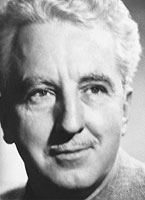
Writer, director, and producer Dudley Nichols’ writing and co-writing credits include Men Without Women (1930), the Academy Award-winning The Informer (1935)...
Dudley Nichols
Writer, director, and producer Dudley Nichols’ writing and co-writing credits include Men Without Women (1930), the Academy Award-winning The Informer (1935), Bringing Up Baby (1938), Stagecoach (1939), The Long Voyage Home (1940), For Whom the Bell Tolls (1943), And Then There Were None (1945), The Bells of St. Mary’s (1945), Mourning Becomes Electra (1947), and Pinky (1949). He worked several times with director John Ford and collaborated with writers Philip Dunne and Ben Hecht.
In 1936, the Screen Writers Guild co-founder became the first Academy Award winner to refuse the Oscar, which he won for The Informer. Citing the Guild’s formation as a response to how the Academy “functioned against the employed talent in any emergency,” Nichols said in a statement: “To accept it would be to turn my back on nearly 1,000 members of the Screen Writers Guild.” He received three more Academy Award nominations for The Long Voyage Home, Air Force (1943), and The Tin Star (1957).
One of the first writers to direct and produce, Nichols also formed an independent production company. He received the WGA Screen Laurel Award in 1954. Nichols was born in Ohio in 1895, and died in Hollywood on January 4, 1960.
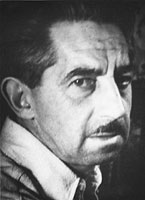
Novelist, playwright, and screenwriter Ernest Pascal was active from the silent era through the 1950s.
Ernest Pascal
His screen credits include Chastity (1923), The Savage (1926), Wedding Rings (1930), Lloyds of London (1936), Wee Willie Winkie (1937), Kidnapped (1938), and The Hound of Baskervilles (1938). He contributed an episode for the television series General Electric Theater.
Pascal advocated for the screenwriter’s rightful place in American literature as early as the 1930s. As Screen Writers Guild president in 1935, he challenged film critics for ignoring or underrating screenwriters, noting that Guild members wrote 90 percent of all motion pictures. “Why is screen authorship the only form of creative writing condemned to the general dog house?” he asked.
His plays include The Amorous Antic, American Primitive, and the stage adaptation of his novel The Marriage Bed, of which he said, “Had it been my original intention to write a play I should certainly never have gone to the trouble of first writing a novel.” Pascal was born in 1896 and died in 1966.
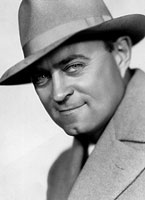
A founding member of the Screen Writers Guild and its first treasurer, Ralph Block was active from the 1920s to 1950, writing westerns, dramas, and musicals.
Ralph Block
A founding member of the Screen Writers Guild and its first treasurer, Ralph Block was active from the 1920s to 1950, writing westerns, dramas, and musicals such as The Arizona Kid (1930), The Right to Live (1935), In Caliente (1935), Patrick the Great (1945), and Nancy Goes to Rio (1950), starring Jane Powell. He produced several films, including Stand and Deliver (1928), starring Lupe Velez; Power (1928), High Voltage (1929), and The Racketeer (1929), all starring Carole Lombard. Block collaborated with W.C. Fields, and is credited with having discovered Lombard.
In 1939 the Academy of Motion Picture Arts and Sciences awarded him an honorary Academy Award for co-founding the Motion Picture Relief Fund, designed to provide support and medical care for motion picture industry employees unable to care for themselves.
In 1946 he received the Medal of Freedom as head of the Office of War Information in India from 1943 to 1946. Additionally, he was an active member of the Hollywood Writers Mobilization and the Motion Picture Democratic Committee.
Also a reporter and theater critic, his articles appeared in publications such as Vanity Fair, the New Republic, The Dial, the Louisville Courier-Journal, and the Kansas City Star. Block was born in Iowa on June 21, 1889, and died in Maryland on January 2, 1974.
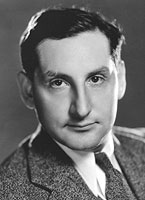
First president and co-founder of the Screen Writers Guild, John Howard Lawson was one of the first screenwriters to write for talkies.
John Howard Lawson
He was active from 1928 until 1947, when he became one of the blacklisted “Hollywood Ten,” indicted for contempt of Congress, found guilty, and jailed for one year.
“I’m much more completely blacklisted than the others. I’m much more notorious and I’m very proud of that,” The New York Times quoted Lawson as saying. “It had much to do with the fact that I helped to organize the Guild and played a leading role in progressive activities until 1947.”
Lawson’s best known scripts include Algiers (1938), the Academy Award-nominated Blockade (1938), Action in the North Atlantic (1943), Sahara (1943), Counter-Attack (1945), and Smash-Up: The Story of a Woman (1947). He also wrote plays, articles, and letters to newspapers, often discussing film aesthetics; he wrote the film theory book Film: The Creative Process. In New York City, he co-founded and was director of the New Playwrights Theater, where he had nine plays produced, including Success Story.
He was born in New York City on September 25, 1894, graduated from Williams College, and briefly worked as a cable editor for Reuters Press. Then, he went overseas to serve in World War I as an ambulance driver in Italy and France. He died in San Francisco on August 11, 1977.
The Writers (A Social Club) Presidents
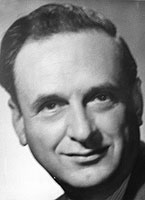
A founder of the Screen Writers' Guild, Howard J. Green wrote or co-wrote numerous films, including the silent comedy Life of Riley (1927)...
Howard J. Green
A founder of the Screen Writers Guild, Howard J. Green wrote or co-wrote numerous films, including the silent comedy Life of Riley (1927), I Am a Fugitive from a Chain Gang (1932), Morning Glory (1933), The Lemon Drop Kid (1934), and George White’s Scandals (1945). He contributed episodes for television series such as The Gene Autry Show, The Roy Rogers Show, and The Adventures of Superman. Green produced a handful of films, including Inside Story (1939).
He was elected chairman of the writer’s branch of the Academy of Motion Pictures Arts and Sciences in 1932. Green was influential in writing the code of practice that governed producer-writer relations of that era. His peers immediately tapped him to represent them in an emergency fact-finding committee during the 50 percent pay-cut dispute of 1933, recommended by the Academy’s board of directors and announced by a group headed by Louis B. Mayer. He lectured on writing at the University of Southern California, and advised aspiring screenwriters to learn to write on legal pads.
“Developing of a screen story is a tedious business, one that requires deep thought for every line,” he said. “As a result, many Hollywood scenarists have given up typing for the slower but more thought-permitting pencil.”
Green was born circa 1893, and was once a newspaper man. He died of a heart attack while attending a Guild meeting on September 2, 1965.

Multi-faceted Alfred A. Cohn wrote dozens of silent and talking films from 1918 to 1934, including Jazzmania (1923), Legend of Hollywood (1924)...
Alfred A. Cohn
Multi-faceted Alfred A. Cohn wrote dozens of silent and talking films from 1918 to 1934, including Jazzmania (1923), Legend of Hollywood (1924), starring Zasu Pitts, The Jazz Singer (1927), A Holy Terror (1931) with Humphrey Bogart, and Me and My Gal (1932), starring Spencer Tracy. He was also a reporter by the age of 15, newspaper and magazine editor, Associated Press correspondent, U.S. Collector of Customs for the port of Los Angeles from 1935 to 1939, coordinating officer for Treasury Department law enforcement agencies, Los Angeles police commissioner in 1946, playwright, and best-selling author of Gun Notches and Take the Witness.
Although Warner Bros. received a special Academy Award for The Jazz Singer, the first successful full-length talking picture, Cohn got only a certificate of honorable mention for his adaptation.
Cohn was born in Freeport, Illinois, on March 26, 1880. In 1925 he was The Writers’ chairman of the dramatic committee, responsible for hosting seasonal play performances for the club’s members and guests. He died in Los Angeles on February 3, 1951.
Grant Carpenter was active in the silent era between 1915 and 1925.
Grant Carpenter
He wrote Shattered Memories (1915), A Child of the Paris Streets (1916), The Woman Gives (1920), starring Norma Talmadge, The Gold Diggers (1923), How to Educate a Wife (1924) with Marie Provost, and Up the Ladder (1925).
During World War I, Carpenter served as assistant secretary of the Motion-Picture War Service Association, an organization that he said was formed to “unify the patriotic work of the 175,000 member motion picture business,” and included Mack Sennett, D.W. Griffith, Charlie Chaplin, Cecil B. DeMille, and Mary Pickford as officers. He appeared before a Congressional committee to advocate for directors, writers, and actors in regards to excess profits tax laws.
“Take a man, who after preparation and long effort...writes a successful play,” said Carpenter. “It may earn for him $200,000 in one year, and the tax will take a very large proportion of it... he may never write another successful play, and year by year, his one work earns smaller and smaller sums.” Instead, he suggested, revenue could be generated by taxing inheritances, social and country club memberships, and accumulated wealth.
Carpenter was born circa 1864 in California, and died in Los Angeles on April 21, 1936.
Screenwriter and associate producer Eugene Percy Heath’s credits include Two Flaming Youths (1927), Half a Bride (1928), and Three Weekends (1928).
E. Percy Heath
Screenwriter and associate producer Eugene Percy Heath’s credits include Two Flaming Youths (1927), Half a Bride (1928), and Three Weekends (1928). He was best known for his adaptation of Dr. Jekyll and Mr. Hyde (1931), written with Samuel Hoffenstein, which earned them an Academy Award. The film was praised by the Los Angeles Times in 1931 as “a major masterpiece of the screen—a passionate, vibrant document shot through with unparalleled brilliance of writing, performance, and direction.”
He served on The Writers play committee, which presented monthly one-act plays before members and guests. Heath was an active member of the Academy of Motion Picture Arts and Sciences, serving on its conciliation committee in 1928 and 1932, and was nominated for its executive committee in 1929.
Heath was born on January 30, 1884, and began his career as a newspaper man at the Baltimore Herald before he switched to playwriting. He wrote the plays Sari, The Scarlet Man, A Bird in Hand, and Mysterious Ways. Heath started in the film business as a writer and adapter in 1919. He died at age 49 on February 9, 1933, in Hollywood.
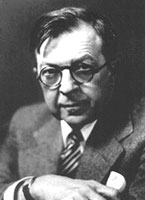
Co-founder of The Writers, a precursor to the Screen Writers Guild, Rupert Hughes led multiple careers and shared screen credits...
Rupert Hughes
Co-founder of The Writers, a precursor to the Screen Writers Guild, Rupert Hughes led multiple careers and shared screen credits for the Oscar-nominated The Patent Leather Kid (1927), Ladies’ Man (1931) with Herman Mankiewicz, No One Man (1932) with Sidney Buchman, E. Percy Heath, and Alice Leahy, and FBI Girl (1951), among numerous other films. His directing credits include The Wall Flower (1922), Look Your Best (1923), and True as Steel (1924).
Best known for his more than 60 books and more than a dozen plays, Hughes was one of the elite authors hired for Samuel Goldwyn’s fleet of “Eminent Authors Inc.” In 1936 Hughes resigned from the Screen Writers Guild, accusing its leadership of communism, and formed the rival group the Screen Playwrights.
Hughes was born in Lancaster, Missouri, on January 31, 1872, earned two degrees at Adelbert College in Cleveland, attended Yale University, and began his writing career as a reporter for the New York Journal. In addition to writing, he was a sculptor, composer, scholar, radio commentator, and a citizen soldier who pursued Pancho Villa. He died on September 9, 1956, in Los Angeles.